Recollections of the Bruce Museum 1909-1978
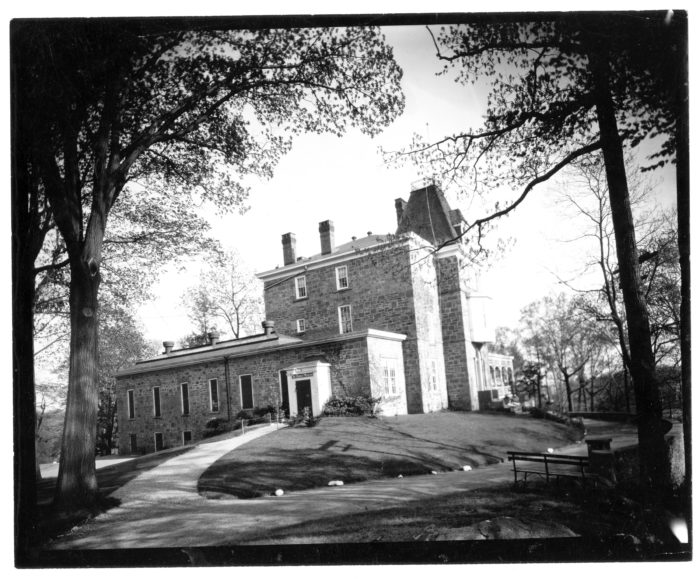
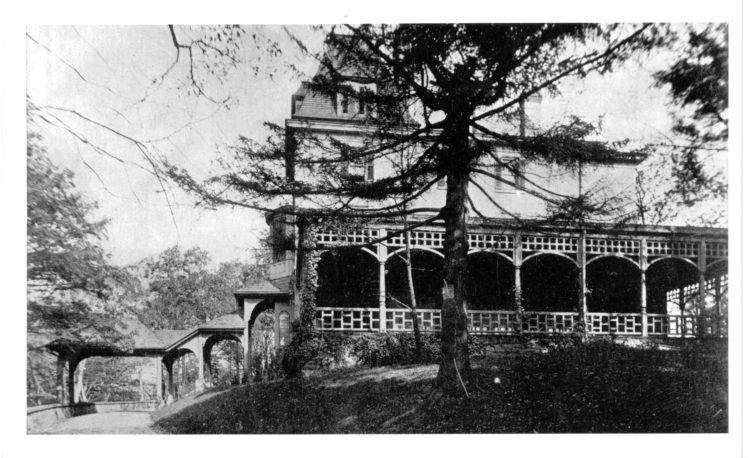
On April 2, 2023, the reimagined Bruce Museum opened to the public. In its reincarnation, it doubled its space from 30,000 to 60,000 square feet. It featured new educational and community spaces, an expanded exhibition space for permanent and temporary installations of art, an enlarged collection storage space, and a handsome new café. This dramatic and exciting “new” Bruce is so incredibly different from its original home, bequeathed to the Town of Greenwich by Robert Moffat Bruce in 1909, that one can scarcely believe the original structure ever existed.
Robert Moffat Bruce (1822-1909) was a Greenwich resident, textile merchant, and philanthropist whose donations to the town have benefited countless thousands over the years. When he died, he bequeathed his home to Greenwich for the creation of a “natural history, historical, and art museum.” According to Peter Sutton, Museum executive director from 2001-2019, this concept of a museum was “a very broad mission, very much a nineteenth century concept.” Bruce also gifted the town with the surrounding 100 acres of parkland known as Bruce Park. In 2007 a series of interviews was conducted by the Oral History Project and compiled into a book entitled “The Bruce Museum – A Century of Change.” The interviews chronicle the stories of leaders associated with the Bruce Museum from 1918-2007 in their own words and according to their own unique perspectives and recollections.
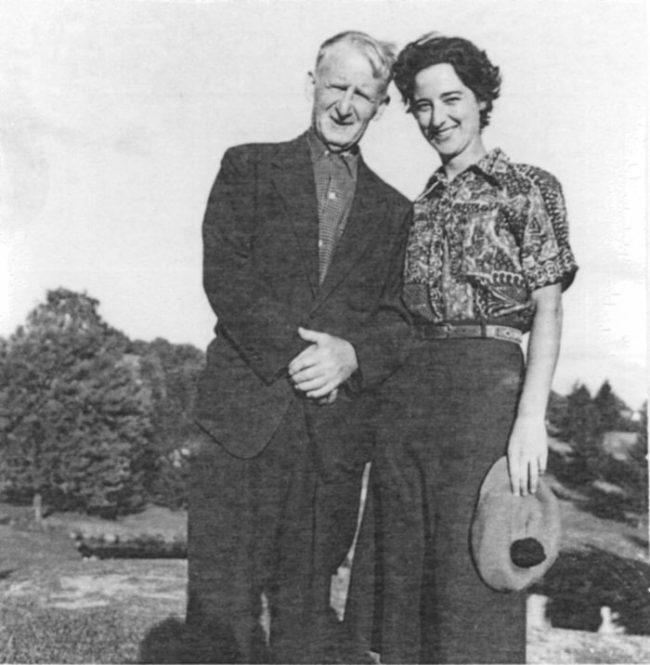
Paul Howes, curator from 1936-1964, explained that, since Robert Bruce’s will stipulated “art museum” lastly in the museum’s focus, it was determined at the time “…that he preferred natural history because it was first in the list in his will…No one in Greenwich and no one since knew that he had any interest in natural history. After he died, they found nothing in the house in the way of natural history specimens….and there were no art objects except for some old, very primitive little paintings of members of the family.”
Robert Bruce also willed $50,000 to employ architects, to renovate the home to make it fit for a museum, and to build a caretaker’s cottage (where I-95 is now). According to Paul Howes, by the time the work was completed in 1918, there was not much left for museum development. “.…And so, then our problem was, will the selectmen accept the museum and give us a small budget to start…? Already we didn’t have enough money for coal, so we had to keep it closed in winter and were open only during the summer.” The first annual budget amount given by the town was $5,000.
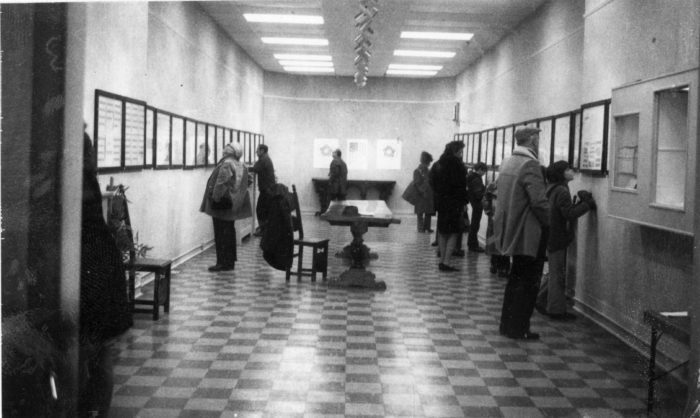
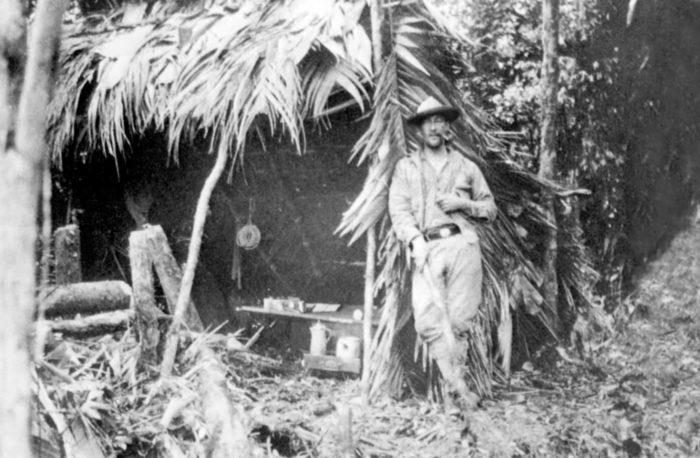
A number of plate-glass showcases were installed for collected and purchased specimens, some of which were yet to be determined. During the winter months, Howes described some of his “trips to South America, the West Indies, and different parts of our own country to collect and work for the museum…l made a trip to Dominica and spent the winter there and worked in the mountains from sea level to the summit, collecting, photographing, and bringing back material for the museum’s collection.”
School groups frequented the museum. Some of the exhibits had a P.T. Barnum aspect to them like the two-bodied rabbit and the snake with two heads. Those “did the trick of getting people’s attention, and they’d come down to see what else we had.” Another attraction was the trout hatchery. According to Howes, “We hatched hundreds of young trout there in the museum that year…It brought in not only just everyday people, but fishermen, too. People who were interested in sports. And it was very educational for the schoolchildren.”
Fund-raising was always a challenge as, at that time, there was not a membership aspect to the museum. According to Howes, “Once in a while we’d get five or ten dollars, but we never got any big amounts of money.” Fortunately, Selectman Wilbur Peck (1947-1951) supported increasing the size of the Bruce Museum budget. In addition, Howes commented, “When they put in the Connecticut Thruway (in 1958) past the museum, with the damages it did to our land, there was enough indemnity to put on that big wing in the back, which almost doubled the size of the museum.”
Raymond Owen, director from 1967-1978, also had a natural history background. He oversaw the museum as it raised its profile in the town. “I was appalled when I joined the museum at how many persons didn’t know where it was…The sign on the dog pound (which existed on the property) was about three times the size of the Bruce Museum sign.” Owen was proud to list as one of his accomplishments, the creation of the Bruce Museum Associates which “began to hold fundraising events and began to get money.”
To further increase attendance at the Museum, Owen inaugurated a lecture series of 190 talks in the eleven years of his tenure. “We had quite a wide-ranging group of people giving these talks, and that brought in people.” A children’s art show, professionally judged, was a popular new program. Portable exhibitions which could be taken to classrooms were initiated. A live zoo and a model of the solar system were draws for families. The gift shop, which started with a card table full of items, grew although its space was limited. According to Owen, he changed the museum “from a children’s museum to one for both children and adults.”
The second part of this two-part series (1979 to the present) will appear in next week’s edition of the Greenwich Sentinel. The collection of Oral History Project interviews entitled “The Bruce Museum – A Century of Change” may be read in its entirety at Greenwich Library and is available for purchase at the OHP office. The OHP is sponsored by Friends of Greenwich library. This blog is not intended as a historical account. Our narrators’ recollections are personal and have not been subject to factual scrutiny. Mary Jacobson serves as blog editor.