Monday, April 24, 2023

Recollections of the Bruce Museum 1909-1978
by Mary A. Jacobson


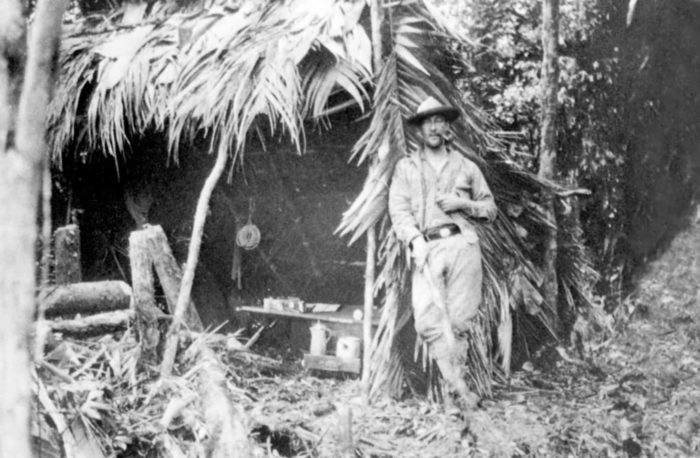
Director Paul Howes in Dominica, West Indies 1929, collecting specimens. Courtesy of the Bruce Museum.

On April 2, 2023, the reimagined Bruce Museum opened to the public. In its reincarnation, it doubled its space from 30,000 to 60,000 square feet. It featured new educational and community spaces, an expanded exhibition space for permanent and temporary installations of art, an enlarged collection storage space, and a handsome new cafĂ©. This dramatic and exciting “new” Bruce is so incredibly different from its original home, bequeathed to the Town of Greenwich by Robert Moffat Bruce in 1909, that one can scarcely believe the original structure ever existed.

Robert Moffat Bruce (1822-1909) was a Greenwich resident, textile merchant, and philanthropist whose donations to the town have benefited countless thousands over the years. When he died, he bequeathed his home to Greenwich for the creation of a “natural history, historical, and art museum.” According to Peter Sutton, Museum executive director from 2001-2019, this concept of a museum was “a very broad mission, very much a nineteenth century concept.” Bruce also gifted the town with the surrounding 100 acres of parkland known as Bruce Park. In 2007 a series of interviews was conducted by the Oral History Project and compiled into a book entitled “The Bruce Museum – A Century of Change.” The interviews chronicle the stories of leaders associated with the Bruce Museum from 1918-2007 in their own words and according to their own unique perspectives and recollections.

Paul Howes, curator from 1936-1964, explained that, since Robert Bruce’s will stipulated “art museum” lastly in the museum’s focus, it was determined at the time “…that he preferred natural history because it was first in the list in his will…No one in Greenwich and no one since knew that he had any interest in natural history. After he died, they found nothing in the house in the way of natural history specimens….and there were no art objects except for some old, very primitive little paintings of members of the family.”

Robert Bruce also willed $50,000 to employ architects, to renovate the home to make it fit for a museum, and to build a caretaker’s cottage (where I-95 is now). According to Paul Howes, by the time the work was completed in 1918, there was not much left for museum development. “.…And so, then our problem was, will the selectmen accept the museum and give us a small budget to start…? Already we didn’t have enough money for coal, so we had to keep it closed in winter and were open only during the summer.” The first annual budget amount given by the town was $5,000.

A number of plate-glass showcases were installed for collected and purchased specimens, some of which were yet to be determined. During the winter months, Howes described some of his “trips to South America, the West Indies, and different parts of our own country to collect and work for the museum…l made a trip to Dominica and spent the winter there and worked in the mountains from sea level to the summit, collecting, photographing, and bringing back material for the museum’s collection.”

School groups frequented the museum. Some of the exhibits had a P.T. Barnum aspect to them like the two-bodied rabbit and the snake with two heads. Those “did the trick of getting people’s attention, and they’d come down to see what else we had.” Another attraction was the trout hatchery. According to Howes, “We hatched hundreds of young trout there in the museum that year…It brought in not only just everyday people, but fishermen, too. People who were interested in sports. And it was very educational for the schoolchildren.”

Fund-raising was always a challenge as, at that time, there was not a membership aspect to the museum. According to Howes, “Once in a while we’d get five or ten dollars, but we never got any big amounts of money.” Fortunately, Selectman Wilbur Peck (1947-1951) supported increasing the size of the Bruce Museum budget. In addition, Howes commented, “When they put in the Connecticut Thruway (in 1958) past the museum, with the damages it did to our land, there was enough indemnity to put on that big wing in the back, which almost doubled the size of the museum.”

Raymond Owen, director from 1967-1978, also had a natural history background. He oversaw the museum as it raised its profile in the town. “I was appalled when I joined the museum at how many persons didn’t know where it was…The sign on the dog pound (which existed on the property) was about three times the size of the Bruce Museum sign.” Owen was proud to list as one of his accomplishments, the creation of the Bruce Museum Associates which “began to hold fundraising events and began to get money.”

To further increase attendance at the Museum, Owen inaugurated a lecture series of 190 talks in the eleven years of his tenure. “We had quite a wide-ranging group of people giving these talks, and that brought in people.” A children’s art show, professionally judged, was a popular new program. Portable exhibitions which could be taken to classrooms were initiated. A live zoo and a model of the solar system were draws for families. The gift shop, which started with a card table full of items, grew although its space was limited. According to Owen, he changed the museum “from a children’s museum to one for both children and adults.”

The second part of this two-part series (1979 to the present) will appear in next week’s edition of the Greenwich Sentinel. The collection of Oral History Project interviews entitled “The Bruce Museum – A Century of Change” may be read in its entirety at Greenwich Library and is available for purchase at the OHP office. The OHP is sponsored by Friends of Greenwich library. This blog is not intended as a historical account. Our narrators’ recollections are personal and have not been subject to factual scrutiny. Mary Jacobson serves as blog editor.
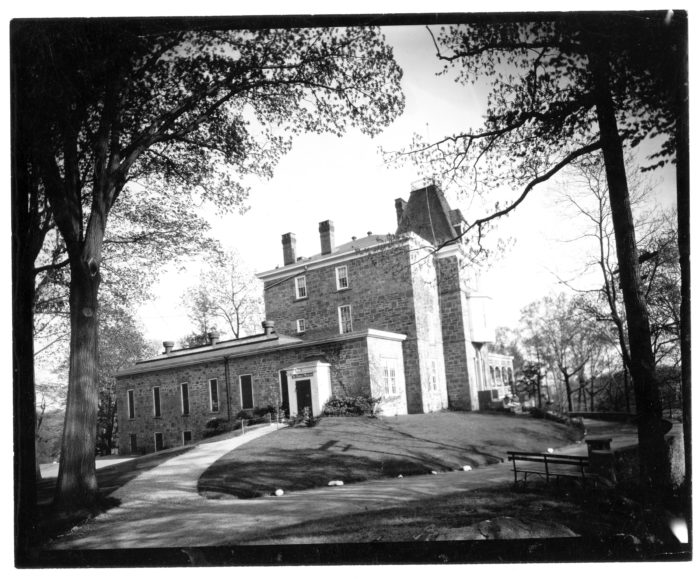
Exterior of the Bruce Museum, 1933. Courtesy of the Bruce Museum.
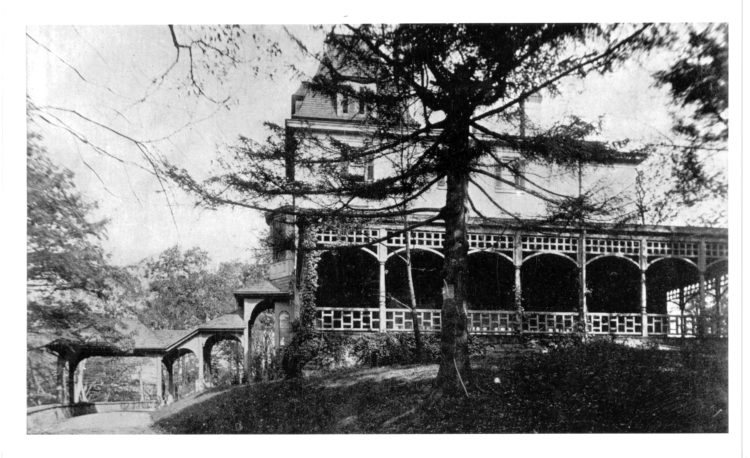
Original Robert Bruce residence bequeathed to the town of Greenwich in 1909. Courtesy of Greenwich Historical Society.
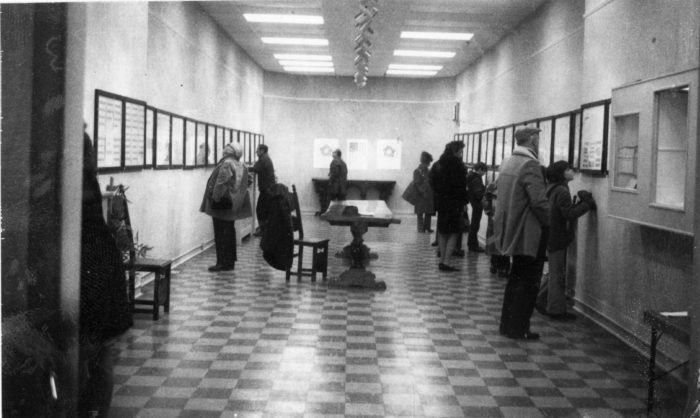
Bruce Museum visitors viewing exhibits, circa 1973. Courtesy of Greenwich Historical Society.


Monday, April 3, 2023

 Louise DeVivo Munro: Golf in Greenwich

by Mary A. Jacobson

Louise Munro and coach Terry Conners. Photo courtesy of Greenwich Library Oral History Project.

As a young girl of twelve in 1948, Louise DeVivo Munro often rode her bike to Innis Arden Golf Club and would watch the golf pro, Terry Conners, give a golf lesson. “When I watched him, I always kept a respectable distance.” One day, Terry motioned to her to come over and said, “You seem to be interested in what I am doing. Do you like to play golf?” As Louise recounts, “There must have been some interest there for me to continue. Either that or I was afraid to say no.” The rest is history. In 2002 Janet Klion of the Oral History Project interviewed this consummate golfer.

Terry Conners gave Louise Munro a golf club and told her to swing it. “I don’t know what he learned from that.” However, he soon remarked, “If you want to learn this game, I will teach you, but you have to be serious. No girlfriends or boyfriends hanging around.” For the next month, Louise, under Conners’ tutelage, did nothing but swing a club without hitting a golf ball “until I had it right and my poor hand blistered all the time.” Rather than being discouraged, Louise was motivated to continue. “Whatever he told me to do, I did, and I showed up on time.”

Louise took lessons with Terry Conners until his health failed. She held him in high esteem as her coach and mentor. “He was so talented. The man was a self-taught golfer, a speed ice skating champion, a boxer. And he molded my swing to look like the great Sammy Snead… He would do things like pretend my hand was a golf shaft, wrap his hand over mine and tighten his fingers to communicate the amount of pressure I should exert on the grip.” Often, at the end of the day, “Terry would ask me to gather the flagsticks from the farthest holes while he walked for the others. I would get on my bicycle and ride out lickety-split onto the green and pull the stick out of the cup and continue to the next cup. Not to worry, the greens were not as they are today.”

In later years, when Louise joined Innis Arden, “. . . we would go there late afternoon to practice on one of the golf holes…Once we got into our practice mode, we would become oblivious to the passing of time and more than once the sun would drop over the horizon…I would finally have to say, ‘Terry, I can’t see my target anymore.’ He would come right back with, ‘Don’t worry, I’ll go up to the green and let you know when you are close to the target. Keep chipping’.…I think practicing with limited vision did contribute to my having ‘touch around the green’ for which I was noted, and there were not many golfers who could match me in that respect.”

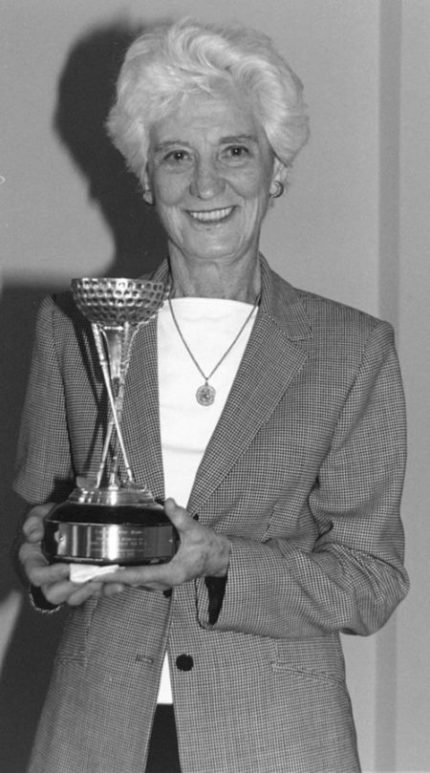
Louise Munro continued to play and enjoy golf and excelled at it. Her association with the Innis Arden Golf Club continued throughout her life. In 1999, Louise attended a gala event at the Hyatt Regency Hotel to celebrate the 100th anniversary of the founding of the Innis Arden Golf Club. There was much celebration for the club which originally started with sixty-four members in 1899. Jeff Harris, the president, rose and made the following statement, “Tonight we recognize an honorary person who is the preeminent athlete of Innis Arden’s first one hundred years…One golfer’s accomplishments stand head and shoulders above all others…This person has won fifty individual championships and was a runner-up in the 1998 championship at Innis Arden and has just won the Legends Tournament of Connecticut.”

Louise Munro with her award as “Preeminent Athlete of First 100 Innis Arden’s Years,” 1999. Courtesy of Greenwich Library Oral History Project.


As Louise listened, it dawned on her that Jeff Harris was referring to her. “All of a sudden, it hit me. ‘Oh my God, he’s talking about me.’ And I wanted to crawl under the table.” Maybe at that moment, Louise’s many championships flashed before her eyes. “My first championship, 1950. Then I won ’56, ’57, ’59, ’60 and then fifteen straight 1962 through 1976.” By 1995, she had won a total of twenty-seven club championships.

Louise DeVivo Munro was lauded with thunderous applause as she was cited as “Innis Arden’s Preeminent Athlete of the Century.” Ever modest, Louise commented, “I consider myself an ordinary gal. For the Board of Governors to award me this most highest honor of my life was, on their part, most generous and kind and thoughtful.”

Perhaps the lesson here is in finding and pursuing one’s passion. Somehow then, the effort in doing so doesn’t seem like hard work. In Louise’s words, “It seems unreal that I should be cited for playing a game I love, and the wins just happened to come along.”

Louise DeVivo Munro, Greenwich resident for more than sixty years, died on September 25, 2015. at the age of 89.

The interview entitled “Golf in Greenwich” may be read in its entirety at Greenwich Library and is available for purchase at the Oral History Project office. The OHP is sponsored by Friends of Greenwich Library. Visit the website at glohistory.org. Mary Jacobson serves as blog editor.


Friday, February 24, 2023

The Gray Ladies of Nathaniel Witherell

by Mary A. Jacobson


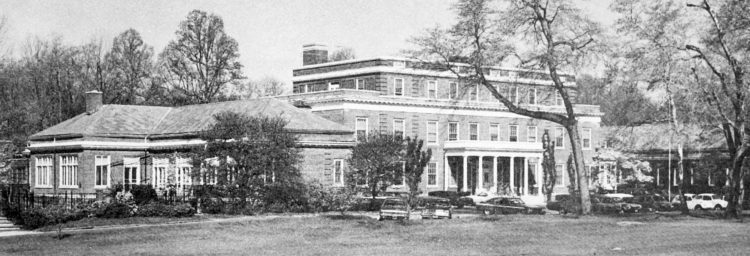
The healthcare facility that we know as The Nathaniel Witherell began as a Municipal Hospital in 1920, a refuge for those suffering from tuberculosis. At the turn of the twentieth century, Greenwich patients with communicable diseases like tuberculosis, diphtheria, and scarlet fever were hard-pressed to find a hospital that could care for them and often were placed far from home. The land for a Municipal Hospital was bequeathed to the town by Robert Bruce in 1903. The building itself was proposed and financed by Rebecca Witherell, and eventually renamed for her husband, Nathaniel, in 1946.


Between the Municipal Hospital and the complex we now know as The Nathaniel Witherell, many iterations have taken place. As the need for care for tuberculosis patients declined, one-half of the building was set aside for those who were chronically ill. Over the years, the complex has undergone renovations and enlargements to better serve the needs of the community through its skilled nursing, short-term rehabilitation, and memory care units. The Oral History Project (OHP) in its many interviews, has preserved the recollections of two residents who were dedicated to bettering the conditions of those housed at Nathaniel Witherell.

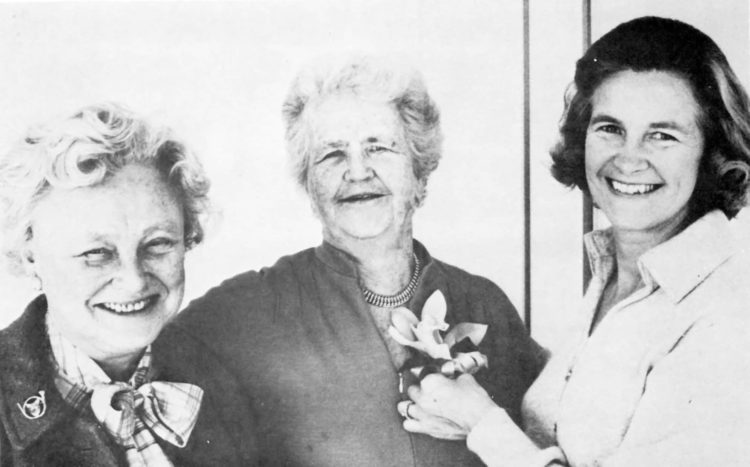
Nancy “Nan” Rockefeller was co-founder and first president of the auxiliary of The Nathaniel Witherell. She was interviewed in 1978 by OHP volunteer, Esther Smith. “I had become interested in 1928 and, as much as I could, I would go up by myself and see what I could do to help the patients.” In 1939, she worked for the Red Cross “because the war was coming.” During the war, she became a Gray Lady. The Gray Ladies were a volunteer organization started under the American Red Cross in 1918, which provided friendly, personal, non-medical services to patients. For three years, Nan “worked as a Red Cross worker in the army camp, as a motor corps driver, Gray Lady, and a nurse’s aide all in one.”

After the war, Nan continued her volunteerism at The Nathaniel Witherell. In 1956, she was approached by Gertrude duPont Howland, “a Gray Lady who worked there” about starting an auxiliary. So, as Nan described it, “We started an auxiliary which is going full blast now and has turned the Nathaniel Witherell Home . . . into really, I think, one of the best nursing homes in the country. And it was through the auxiliary that they have really humanized the place.”


One of the accomplishments of the Auxiliary, of which Nan was particularly proud, was to get church services started at Nathaniel Witherell because “when you come to the end of the road, you certainly need faith and hope and comfort.” Nan was instrumental in raising additional money for a chapel at the time Nathaniel Witherell was being renovated and expanded. The cornerstone for the Nathaniel Witherell Chapel was laid in 1976.

At that time of her interview in 1978, Nan stated, “…we have a waiting list of over a hundred people desperate to get in, and the list becomes longer as people live longer and Greenwich grows.” Nan Rockefeller’s spirit, drive, and concern for others was evident: “I really love helping people because I really love them…It’s been a great pleasure and satisfaction.”

Gertrude duPont Howland was interviewed by OHP volunteer Margaret French in 1987. She was an inveterate volunteer in the town of Greenwich who also contributed much to Nathaniel Witherell. As part of the Gray Ladies at Nathaniel Witherell in the 1940s, she wanted to improve the everyday lot of the patients there. It started by bringing “each patient a gift and a little happy birthday cake on a pretty tray.”


At the time, Gertrude Howland was not impressed by the conditions and services for the patients. Because of the war, there was a shortage of doctors and nurses and “there was absolutely no program of any description whatsoever at Nathaniel Witherell . . . no physical therapy, no occupational therapy, no religious services of any description.” At that time, the facility was under the Department of Health and they “had so many other things to supervise – restaurants, sewage, property, you name it – that they really didn’t get out to Nathaniel Witherell very often.” To make it worse, according to Mrs. Howland, the floors were “battleship brown linoleum,” the walls were tan “because all municipally owned buildings were painted the same color,” and the beds were white. “That was it until the Gray Ladies got there.”

Gertrude Howland had many ideas to expand the volunteer services at Nathaniel Witherell and, in concert with Nan Rockefeller, supported the formation of an Auxiliary in 1956. A number of services were initiated for the residents, funded by the Auxiliary, and “then the town fathers would see that it really was worth doing and the town would take over the cost of that.” This formula led to the funding and establishment of recreational, occupational, and physical therapists. “Then the place was growing in reputation.”

Howland discovered that “not a single patient was ever allowed to put their foot outdoors” because “so many of them are confused and might wander away.” Therefore, along with other volunteers, she begged Green Fingers Garden Club, of which she was an early member, “to put up a fenced-in garden that they could go out into without supervision…A perfectly beautiful garden is there now.” Also, with the new west wing, “we opened up a real beauty shop and a gift shop and a coffee shop and snack bar. I ran the gift shop for four years.”

Nathaniel Witherell Garden. Photo by Howard Conley.

Mrs. Howland is proud of the changes that she has seen in Nathaniel Witherell, from its days as a home for tubercular patients to its latest iteration at the time of her 1987 interview. “I have never been anywhere that was more civic minded than the people here in Greenwich are.”

The interviews entitled “Meeting the Needs of a Community” and “Missions Accomplished” may be read in their entirety at Greenwich Library and are available for purchase at the Oral History Project office. The OHP is sponsored by Friends of Greenwich Library. Visit the website at glohistory.org. Mary Jacobson serves as blog editor.