Monday, January 30, 2023

 And All That Jazz!

by Mary A. Jacobson

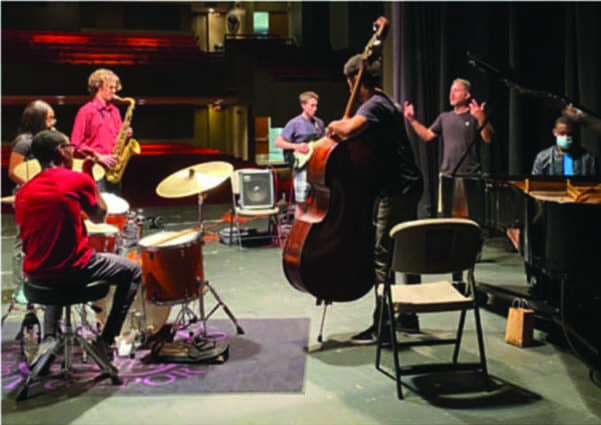
BackCountry Jazz music education student workshop. Courtesy of BackCountry Jazz.

In January of 2021, in the midst of the pandemic, Bennie Wallace, tenor saxophonist and founder of BackCountry Jazz, made the following observation: “You know what they say about every cloud has a silver lining…this one had a huge silver lining for us.”

It seems hard to imagine how one could envision any benefits for a musical performance and educational enterprise at a time when concerts were cancelled, musicians were unemployed, and classes were remote. Connie Gibb interviewed Bennie Wallace in January 2021 for the Oral History COVID Project to determine how BackCountry Jazz coped with COVID.

BackCountry Jazz began in 2007, primarily as a concert organization. Bennie’s wife, Jeanette, is the volunteer executive director. The board of directors is composed of musicians and music educators. In addition, an advisory board consists of “people who support the organization and keep it going financially.”

In 2010, after a concert in Bridgeport and an introduction to that city’s music program, BackCountry Jazz initiated an annual free summer music camp for the benefit of Bridgeport students. Children in grades five through twelve, with at least one year of instrumental musical training and a teacher recommendation, were encouraged to apply. Seventy students were served in this four-week, full-day program. In addition, an after-school program, on Fridays throughout the year, enabled the children to continue their music education and build upon the progress they had made during the summer.

“It’s evolved to a real music program and we’ve been sending music students to conservatories and universities every year for the last few years. And I’m very proud of them. And it’s really been a thrill to work with these kids. And, at the same time, we would do two or three concerts in Greenwich each year, and a few things outside of Greenwich…And so that’s where we were pre-COVID.”
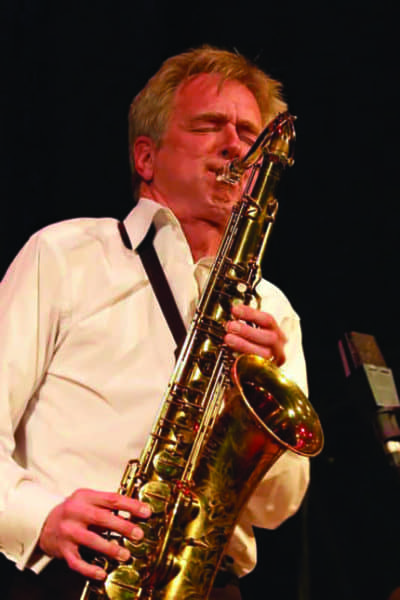
Bennie Wallace remembered the day when COVID impacted the programs of BackCountry Jazz. “Well, it was so sudden…The kids have a performing group called the BeBoppers (a twelve-member jazz ensemble made up of advanced students). And they were supposed to play two concerts that weekend (in March 2020), one at the Round Hill Community Church…The next morning I talked to the pastor over there and he said, no, we’re canceling. We’re going to do the church remote. So, it just kind of hit us all at once.”

Bennie Wallace. Courtesy of BackCountry Jazz.

With COVID, the University of Bridgeport, where the after-school program was held, transitioned to remote learning. In order to deal with the effects of these disruptions to their treasured educational programs, different approaches were employed. “Our camp this summer (2020) was mostly online, although we had a few sessions in my yard with the advanced students.” In December of 2020, a grant was awarded for an ear-training program that was made available to the BeBoppers “which is something very unusual for kids at that age. And we’ve been having different kinds of workshops with the kids.”

In addition, a mentoring program, pairing students with prominent professionals, was developed for advanced students “who are really dedicated, and they can’t play together now; it’s really tragic.” For most of them, Bennie explained, “I’ll find an associate who’s a well-known recording artist…So the students are working one-on-one with touring musicians and recording musicians.”

Bennie describes the day a new way of delivering music to a live audience during COVID occurred to him. “In April (2020), I was listening to the radio one day to a doctor talking about COVID…And he said, if you’re outdoors and you’re socially distanced from people, you’re safe. And this light went on in my head, and I realized that we have this huge lawn at our house that’s maybe a couple of acres.” Bennie started putting on concerts in his yard for a limited audience of twenty-five to thirty people. “We would mark off areas for people to sit…We started doing this almost on a weekly basis. And I thought, people will come until they get tired of it, which will probably be six weeks…And so we thought, okay, here’s a chance to give the musicians some work, and make some music, and give something back to the community that supported this. So, all these concerts we did in the summer were free.”

Eighteen concerts later, Bennie realized that he had a winning formula. Additional larger outdoor concert venues were offered to BackCountry Jazz accommodating one hundred people with a waiting list. “It worked out really well. And, as a result of that, some people donated to BackCountry Jazz,” which helped offset the expense of paying the musicians. “BackCountry Jazz never asks the musician to do anything for free.”

Outdoor concerts and student mentoring, positive developments from a challenging COVID experience, will continue as part of BackCountry Jazz. In his interview, Bennie also anticipated a welcome return to in-person learning at camp and at the University of Bridgeport. “Developing creative minds and individual creative musicians…is what jazz has been about from the very beginning…And so we’ve been training the kids the way musicians were trained on the bandstand in the heyday of jazz.”

This past summer, the successful BackCountry Jazz series of ten outdoor concerts, entitled the Greenwich Jazz Festival 2022, played from June through September. The average number of attendees was 200. Plans are in the works for Greenwich Jazz Festival 2023. BackCountry Jazz is BACK!


The interview entitled “COVID-19 Jazz in Greenwich” may be read in its entirety in Greenwich Library and is available for purchase at the Oral History Project office. The OHP is sponsored by Friends of Greenwich Library. Visit the website at glohistory.org. Mary A. Jacobson serves as blog editor.
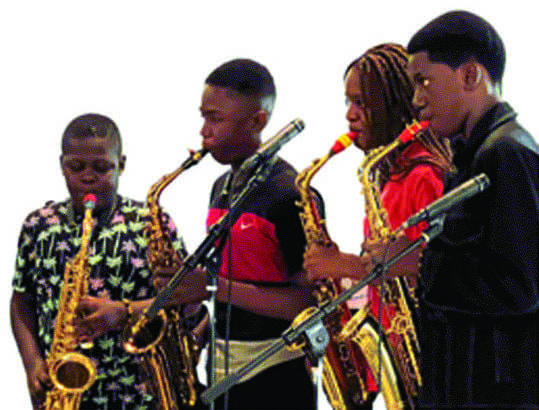
Bridgeport BCJ music students in performance. Courtesy of BackCountry Jazz.

Friday, December 23, 2022

The Legacy of a Community Gem in Old Greenwich

by Mary A. Jacobson

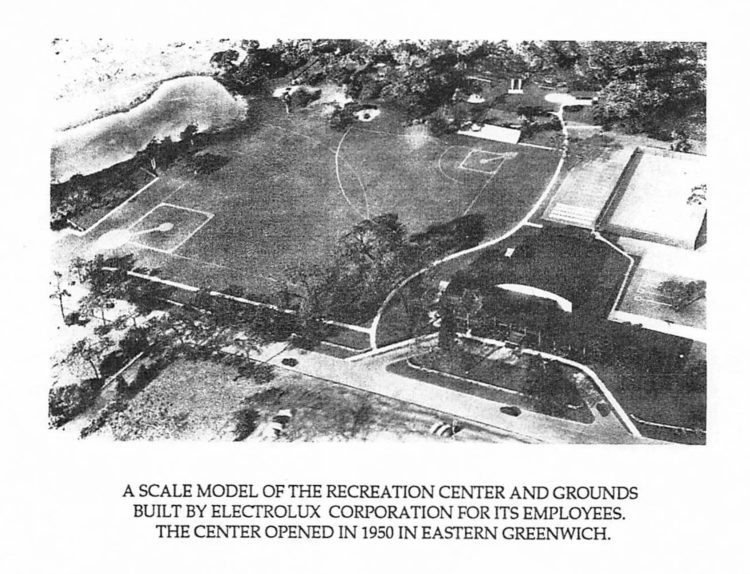
Scale model of the 20-acre recreation complex (Ekman Center) built in Old Greenwich in 1950 for Electrolux employees which became the Greenwich Civic Center in 1967. Courtesy of the Oral History Project.

Seventy-two years ago, in December of 1950, on the grounds of the present construction site of the Cohen Eastern Greenwich Civic Center, the CEO of Electrolux, E.V. Ekman, proudly announced the opening of the Electrolux Recreation Center for the benefit of its employees and their families. In Mr. Ekman’s words, “This is an Electrolux investment…We shall measure the soundness of this investment only in terms of the amount of good that it can be made to generate.”

The Electrolux Company began manufacturing in Old Greenwich in 1933, producing millions of vacuum cleaners by the time it closed in 1985. After World War II, Electrolux acquired a 20-acre tract of land adjoining the plant and set about planning a recreation center and playing fields. In 1948, the task of “converting a swampy waste into a paradise for play for Electrolux folk” began. The completed project afforded workers eight bowling alleys, ball fields, an auditorium/gymnasium, snack bar, and lounges.

John De Forest worked for Electrolux in the 1960s and was interviewed by Penny Haughwout of the Oral History Project in 1986. He described the various activities, parties, entertainment, and dances that were provided for the employees at the then-renamed Ekman Center. De Forest recounted, “At the time it (the Center) served a purpose. But, as the years went on, with all the competition with television and other things, lifestyles changed.” Over time, many employees preferred to go home at the end of the workday and did not stay for recreational activities.

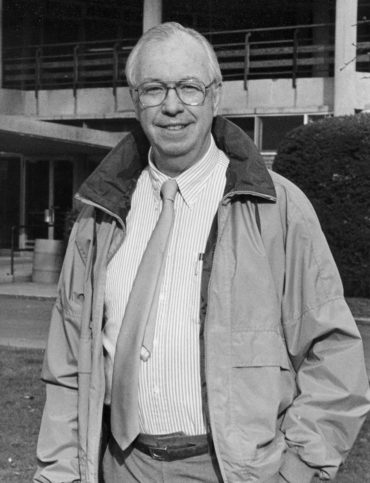
In 1967, the Town of Greenwich purchased the building and grounds for $432,000 and renamed it the Greenwich Civic Center (later the Eastern Greenwich Civic Center). At the time, Lowell Weicker was First Selectman of Greenwich. Charles Henninger was its first director and remained in that position for twenty-five years. In 1992, he was interviewed by Patricia Holch of the Oral History Project. “Four hundred and thirty-two thousand dollars for the building and twenty acres of property…was a very, very good deal for the town.”

Charles Henninger. Photo by Karl Gleason. Courtesy of the Oral History Project.

According to Henninger, “The early days of the Center were very youth oriented. We had drop-in programs. Dances every other week. The dances were an adventure because, in those days, we cut it off at a thousand…all the regional and local bands that were popular with the kids. Things like the Strawberry Alarm Clock and The Rascals, The Mothers of Invention, Wilson Pickett…All these groups drew lots of people.”

Many celebrities were hosted over the years. “Lionel Hampton’s been here several times. Frank Sinatra Jr., Grand Ole Opry, George Gobel, Jonnie Ray, Myron Cohen…Up with People. Very popular. Big drawing card.” The large outdoor acreage provided for tennis, baseball diamonds, a children’s playground, softball and soccer leagues, company picnics, and much more. The bowling alleys were eventually covered over to provide for more much-needed space.

Senior citizens events included parties at Thanksgiving, St Patrick’s Day, Christmas, and End-of-Season, averaging four to five hundred seniors. For the Thanksgiving event, Henninger needed more people to wait on tables. “So, I just happened to mention at one of the Board of Estimate meetings, ‘Why don’t you guys come out to do it?” Subsequent Thanksgiving gatherings included “three Selectmen, members of the Board of Estimate, the fire chief, the police chief, Department of Social Services, traffic engineer…It’s really become something that people look forward to doing. So, it’s a fun thing. . . We’re very proud of that.”

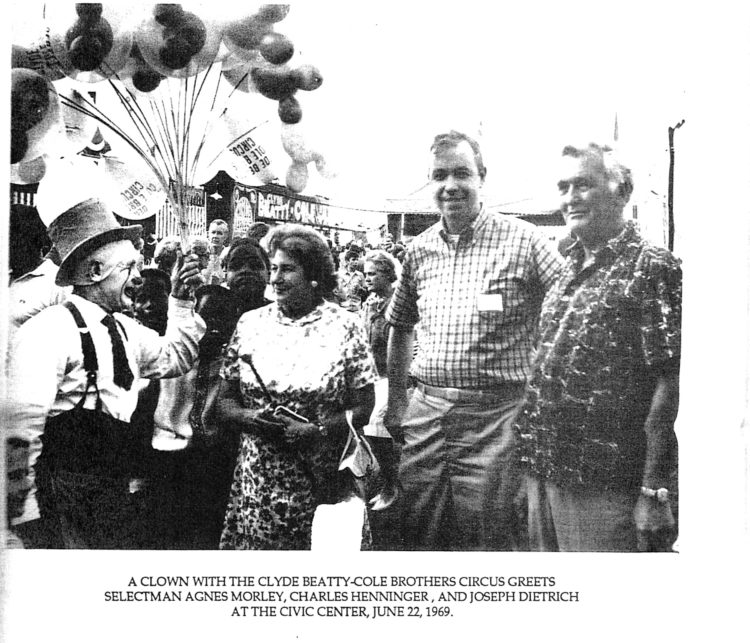
Popular and unforgettable events in the late sixties and early seventies were the circuses “sponsored by the Friends of the Library.” The first year of the circus, five thousand tickets were sold, and a huge tent covered the outside area. “That was the day of the record rainfall of nine inches…We tied the elephants on the small trees. The elephants uprooted the trees… All the trucks got caught up to their axles in mud. So, we had the elephants pull the trucks out. So, it really looked like a disaster.”

Henninger also recalled accommodating the Darien High School senior prom in the 1970s when it was suddenly displaced because of a fire at their anticipated location. The night before “we had the state collie show here. We were up to our ankles in dog hair.” The students arrived to set up for the prom “and were all upset, but we vacuumed all over and got it ready and it worked out. So, that’s the challenge.”

In 1991 there were 1203 different programs at the EGCC. “We had dances, fashion shows, concerts, dog shows, picnics, antique shows, train shows, athletic leagues, banquets, seminars, bridal showers, baby showers, roller skating programs, senior citizen programs, Weight Watchers, square dancing…We don’t have a free weekend…When Governor Weicker was here maybe three months ago, he stuck his head in the door and said, ‘I thought this place was a white elephant. I can’t find a place to park out there.’ He’s always very proud that he pushed to get the place.”

As of this writing, the EGCC is currently an active construction site as it undergoes a transformation within its existing footprint. The original building has been demolished and will reopen as the Cohen Eastern Greenwich Civic Center, after Steven and Alexandra Cohen donated five million dollars to the project, in a public/private partnership with the Town of Greenwich.

May the seventy-two-year investment in this site continue, in the words of Mr. Ekman of Electrolux in 1950, “to provide an abundant return in terms of human values.”

The interviews entitled “Electrolux” and “Greenwich Civic Center” may be read in their entirety at Greenwich Library and are available for purchase at the Oral History Project office. The OHP is sponsored by Friends of Greenwich Library. Visit the website at glohistory.org. Mary Jacobson serves as blog editor.
A clown with the Clyde Beatty-Cole Brothers Circus greets Selectman Agnes Morley, Charles Henninger, and Joseph Dietrich at the GCC, 1969. Photo by Cal Hood. Courtesy of the Oral History Project.


Friday, November 25, 2022

Conyers Farm Then and Now

by Mary A. Jacobson

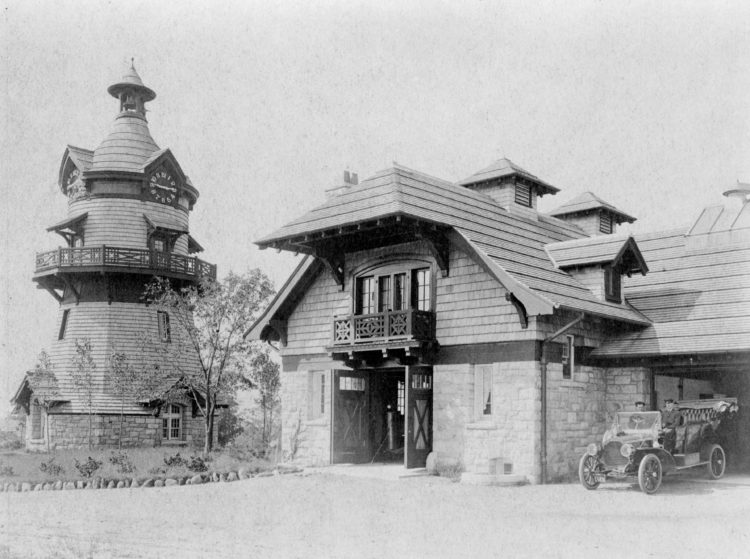
Clock tower and part of garage of Converse estate. Courtesy of Frances Benjamin Johnston Photograph Collection, Library of Congress (Reproduction #LC-USZ62-110482).


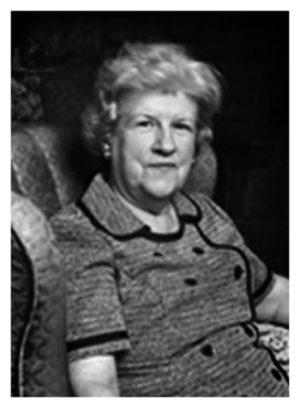
In 1977, the land that now comprises the 78 luxury homes of Conyers Farm, was described as “desolate and overgrown…I have no desire to see the place in its present state of neglect.” These words were spoken to interviewer Penny Bott of the Oral History Project by narrator Eleanor Enright as she decried the condition of the once-beautiful estate where she had worked from 1934 to 1950.

Eleanor Enright worked as a secretary to Carlyle Gowdy, manager at Conyers Farm. Her mother, Grace Sullivan, preceded her years before in the same position for then-manager, George Drew. Eleanor shared vivid memories of the history and times of the original estate, which comprised over 1,400 acres. In her words, “I am glad to have experienced this life cycle of a place.”

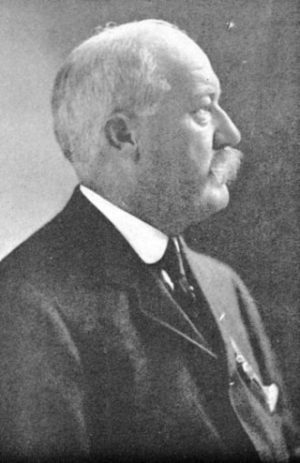
Greenwich at the turn of the twentieth century was a farming community. By 1904, Edmund Cogswell Converse, steel industrialist and first president of Bankers Trust Company, assembled his estate by purchasing and consolidating approximately 20 farms in North Greenwich and the neighboring town of North Castle, NY. He then began work on converting the property into Conyers Manor. (“Conyers” was purportedly an Old English spelling of “Converse.”)

Edmund Converse. Courtesy of Greenwich News and Graphic, September 22, 1916.

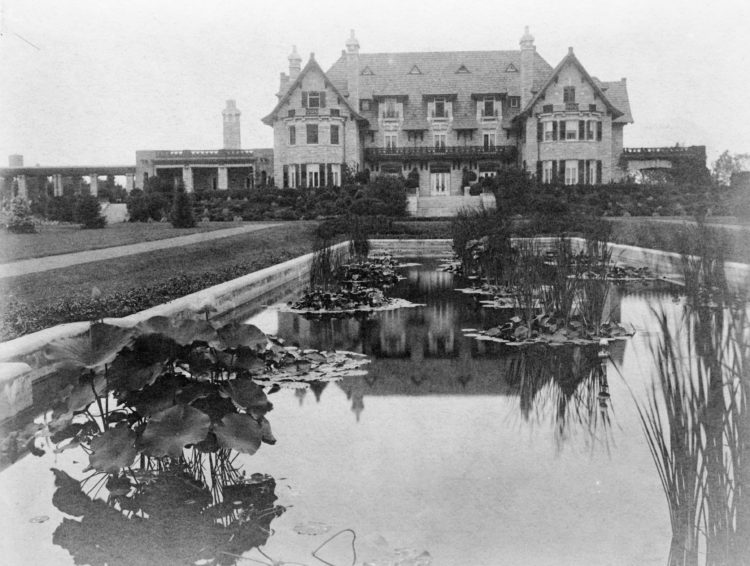
According to Eleanor, “They used hundreds of workmen . . . artisans of every type. At that time horses were still in use, and many teams hauled the materials from the (railroad) station…It was like the building of a village.” The original gatehouse was on the corner of Lower Cross Road and North Street. A mile-long driveway led to the 52-room manor house, which was situated on the highest point of land, “with a perfect view of the surrounding countryside and Long Island Sound.” Along the driveway were specimen trees “planted in every variety you could imagine…There were all kinds of bulbs and flowers and flowering shrubs blooming in spring and summer.”

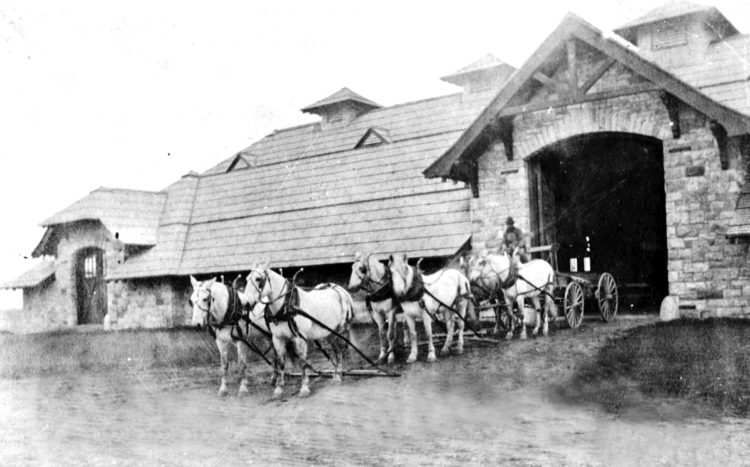
There were approximately 40 structures on the estate, many designed by Donn Barber, a well-known architect. Buildings included the stone manor stables that housed Converse’s own horses and carriages. Other structures included a farm garage with a fire engine. There were also eight greenhouses. “One was a palm house, a large round glass building like the one at the Botanical Garden in New York, where they grew nectarine, palm trees, orange trees, and flowers of all description.” In addition, there was the blacksmith shop, a boarding house for a number of the workers, a one-room schoolhouse, an icehouse, a boathouse, a 30,000-gallon water tank, and a cold storage building with a capacity for “at least forty or fifty thousand bushels.”

The farm barn had stone walls and a steeply pitched shingled roof. Its wings housed the cow barn and the horse barn; in the center were the wagons. Guernsey cows grazed in the fields. “The milk was so good…You could see that the cream filled at least half the bottle.” In addition to the farm barn, there was an overflow barn “used to store all of the extra hay and farm equipment, and so forth. Also, they had a poultry department where fresh eggs and chickens were produced.”

One of the signature structures on the property was the clock tower. “It was absolutely beautiful. It would remind you of a windmill.” At approximately forty feet tall, one could see the Empire State Building from the balcony under the face of the clock. “There was a bell in the tower, and the bell would ring the hour and the half hour…It just sounded all over the countryside, like a fire bell. In fact, that was the bell they used as a fire alarm and that bell would sound all over the Stanwich area.”

A number of the original farmhouses that comprised the estate were maintained by house employees. Many of the homes were referred to by the names of the families who had once lived in them. “We always spoke of the McCann Cottage, the Powers Cottage, the Buckout Cottage, the Albert Close and Gilbert Close houses, and the Mead Farm.”

Approximately four hundred acres of the property were developed into orchards. “Conyers Farm apples, pears, and peaches became known throughout the East coast. People used to drive out on Sundays from New York…We shipped pears and apples many times across the country to customers and to our boys in the service.”

Edmund Converse died in 1921. The property was unoccupied until it was purchased in 1936 by Lewis Rosenstiel, founder of Schenley Corporation. His hopes to reduce the zoning regulation from four acres per lot to half-acre lots for 83 acres was rebuffed by the town. The proposal of office buildings on the property was also denied. Over the years, few improvements were made to the neglected estate and a number of buildings were ravaged by fire.

When Eleanor Enright was interviewed in 1977, Conyers Farm had not yet been purchased by Peter Brandt and developed into the minimum 10-acre residential properties, arts center (repurposed from the original cold storage stone barn), and polo fields we know today. At the time of her interview, Eleanor’s closing remarks were, “And so what will the future hold for this wonderful place? I hope I live to see a bright future for it.”

Eleanor Enright. Courtesy of Miss Enright.

The book “Conyers Farm” may be read at Greenwich Library and is available for purchase at the Oral History Project office. The OHP is sponsored by the Friends of Greenwich Library. Visit the website at glohistory.org. Mary Jacobson, OHP blog editor.

Home of Edmund Converse. Courtesy of Frances Benjamin Johnston Photograph Collection, Library of Congress (Reproduction #LC-USZ62-110479).
Horses and wagon exiting the cold storage barn. Courtesy of the Greenwich Library, John Gotch Photo Collection.